If you want to be informed when a new interview is online, follow us on Instagram and LinkedIn
For any question or potential interview requests, write to info@developments.media
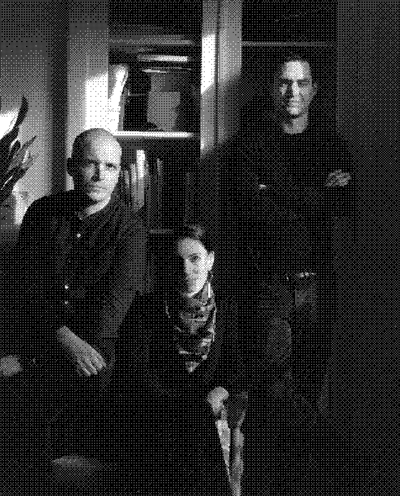
Developments was founded by Simon Descamps, Isabelle Moisy-Cobti and Antoine Soubrier (pictured above, from left to right) who are the managing partners of Bildung.
Developments website has been designed by Bureau Antoine Roux and developed by Tristan Bagot.
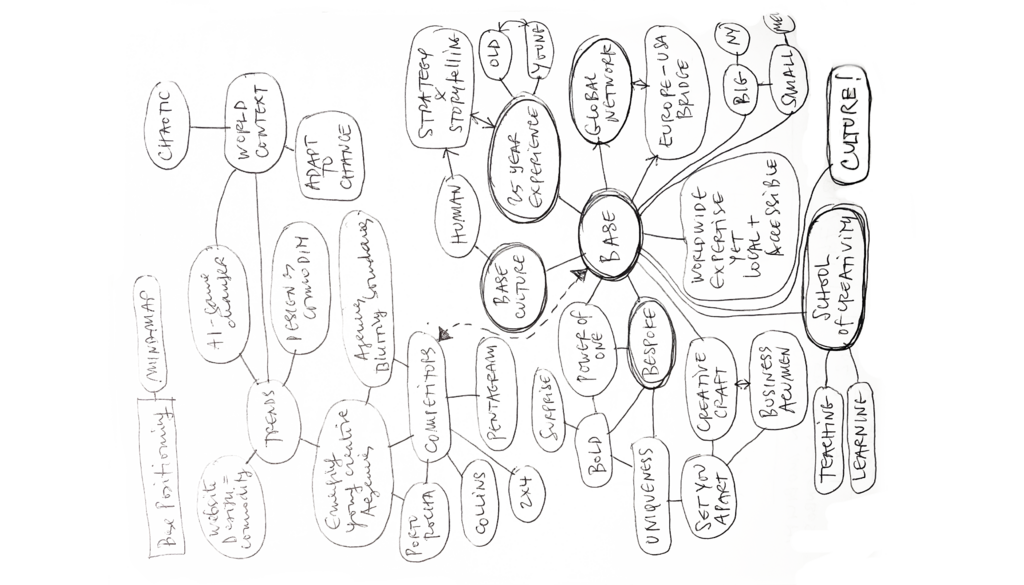
Hello, can you introduce yourselves?
DJ
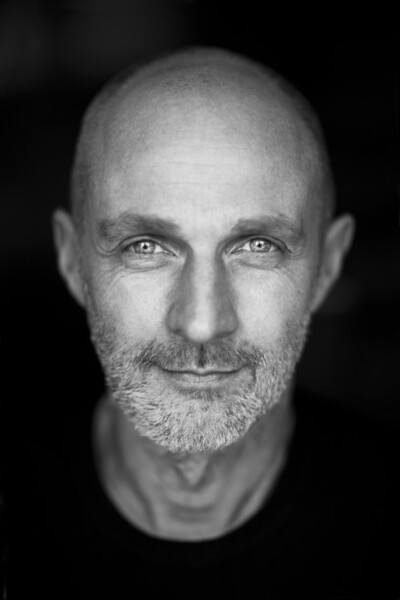
I am Dimitri Jeurissen, originally from Flanders but I have lived in Brussels since I was eighteen. I studied graphic communication at La Cambre and very quickly partnered with Thierry Brunfaut. We started Base Design straight out of school because we did not want to join another agency. I only did a three-week internship in an advertising firm, in the eighties, with ponytails and too much cocaine around, so I left that world quickly. We decided to build something of our own instead. My background is in graphic design, but I quickly moved toward image-making and art direction.
TB
We both are Belgian and met while studying at La Cambre in Brussels. It’s important to say that we both did not graduate. I spent two years in Spain working at Studio Summa in Barcelona in the early nineties. I come from a family of architects on one side and from a very artistic background on the other, with opera and the performing arts. This mix of structure and creativity has always influenced my work. Our mutual complementarity has been one of the foundations of our partnership since the beginning.
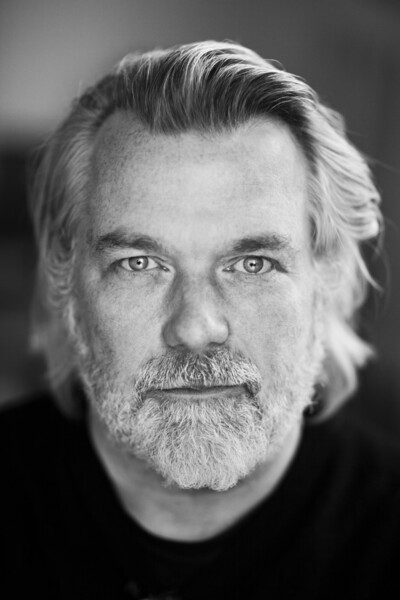
Dimitri Jeurissen
Thierry Brunfaut
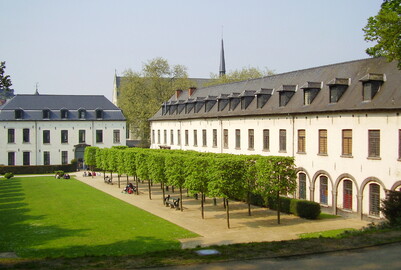
La Cambre in Brussels, Belgium
How would you describe your current activities?
DJ
The core of what we do has always been about developing identities. We have always kept that definition quite broad, never limiting ourselves to purely corporate identity work. For us, identity can mean many things. From the beginning we have been passionate about shaping how brands, products or institutions express themselves, both visually and through their communication. We focus on how they convey their personality and message to different audiences, combining design and communication as two inseparable aspects of the same practice.
TB
Base Design today is a network of studios that all do the same kind of work but within different environments and cultures. That has always been a real obsession for us. Very early on, we wanted to move beyond Belgium and collaborate internationally, which is why we opened studios abroad, starting with New York and later expanding to other countries. This curiosity for collaborating with other people in other cultures still defines us. At the moment, Base counts around one hundred people across five studios: Brussels, New York, Geneva, Melbourne and Saigon, plus a digital unit that supports all five. The Saigon studio just opened two weeks ago, which shows that our drive for international growth and cultural exchange remains very much alive.
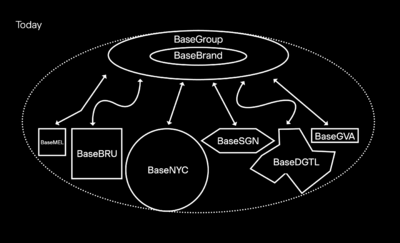
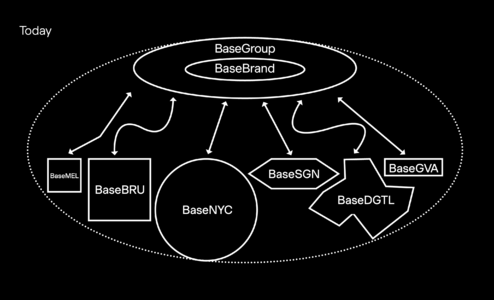
Base’s structure
What is your current state of mind?
TB
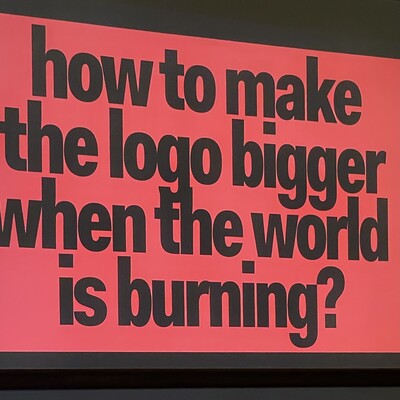
Our mindset is a mix of excitement and concern. The excitement comes from opening our new studio in Saigon and collaborating with Rice Studio whose culture feels very close to ours. The concern comes from the state of the world and the question of how to stay relevant as creatives today. One of our designers, Aurélia, recently gave a talk called How to make the logo bigger when the world is burning, which perfectly sums up this tension. What is the relevance of our work in a world facing such crises? How can we both participate in the system and still criticize it, while trying to contribute to more human projects?
DJ
We also think a lot about transmission and how to give space to the next generation so that Base can continue beyond us. The studio has always been driven by people and collaboration rather than strategy or individualism. Creativity for us comes from collective energy and shared curiosity. This is why we have lunch together every Wednesday, meet with our partners several times a year, and keep expanding our network in new places like Vietnam.
What first led you to design and visual culture?
TB
I come from a background deeply shaped by architecture and modernism, while Dimitri grew up surrounded by fashion and by contemporary art. That mix of worlds became the foundation of our early years. When we started, we were working a lot with art galleries and small emerging fashion brands that were part of Belgium’s underground scene in the early nineties. That cultural environment and our collaborations with artists had a huge influence on us and still have today.
DJ
Art - and conceptual art in particular - has always been my main influence, especially the dialogue between image and text, which are two complementary mediums that we still explore in our work. Artists like Marcel Broodthaers have influenced the way we think, write and stay relevant to what is happening in society.
Very early on, we also had the opportunity to collaborate with the gallery Xavier Hufkens, which was just starting out at the time, and through them we worked with Joseph Kosuth, one of the pioneers of conceptual art. His work perfectly illustrates the relationship between the object, the image, and the definition of the word itself. This way of thinking has impacted us ever since.
When you launched Base, what was the initial intuition, if there was one?
TB
We started in Brussels at a time where branding agencies did not really exist. The word “branding” was not even part of our vocabulary. There were independent graphic designers and advertising agencies, but nothing in between. We built something different, somewhere between design, image and language, and we have always tried to stay outside predefined categories.
In contrast to Anglo-Saxon or Scandinavian countries, where branding was already seen as a creative discipline, in Belgium and much of continental Europe, it was often viewed as too commercial. Brussels sits at a cultural crossroads, and we both grew up looking outward. We were more inspired by the Netherlands and the UK than by France or Southern Europe, where design was often more decorative.
Those early influences shaped our way of thinking about identity and collaboration. Base was built on intuition, curiosity and encounters with people who shared that same open mindset, which has since become a common language across all our studios.
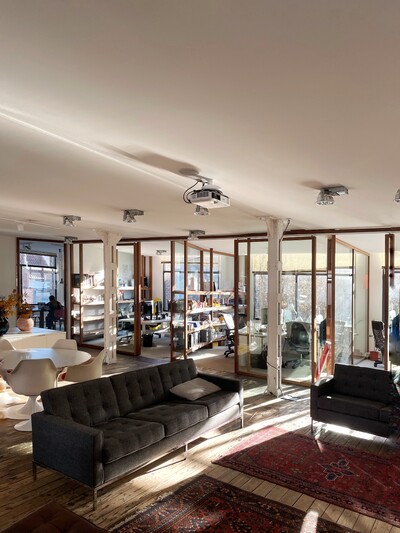
Base’s studio
Who were your first creative references such as artists, designers, images or cultural influences?
DJ
I was very influenced by the art world and by the people we met early on, who all had a rich and thoughtful way of looking at society. We were coming out of the minimalist period, which also shaped our sense of form and restraint. At the same time, I was moving between two worlds: contemporary art and the flea market scene, where I made a living buying and selling objects I loved. That combination of popular culture and more conceptual art gave me a broad perspective and a real curiosity for how things are made and valued.
Those early years in Belgium were also marked by a particular creative freedom. The country sat at a crossroads between different influences — Anglo-Saxon, French, Swiss, and Dutch — which created a kind of a fertile no man’s land. Designers like Martin Margiela and artists such as Lawrence Weiner or Richard Prince were key influences for us at the time.
TB
Another major influence for me has always been cinema and storytelling. Even today, we structure our client presentations like film narratives, with a clear rhythm and progression. We never learned “strategy” in a formal way; we learned how to build a framework around the story. For us, every project must have an idea and a narrative behind it.


Martin Margiela
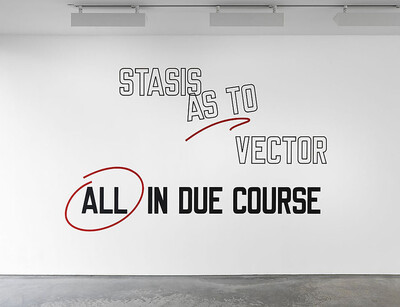
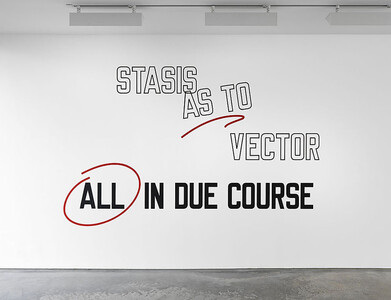
Laurence Wiener
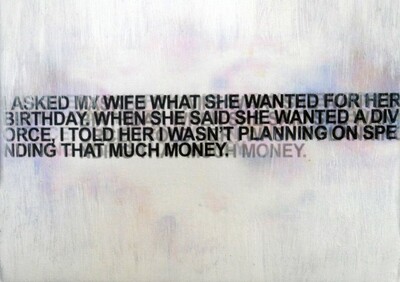
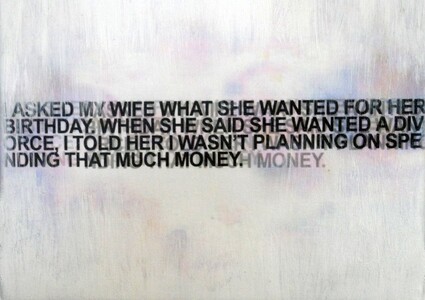
Richard Prince
How do you prepare your client presentations or pitches?
TB
Our approach to client presentations is very flexible. There is a general structure behind how we think, but no fixed formula. Each project has its own rhythm and requires a different way of telling the story. Sometimes we start by showing the final idea and then explain how we got there. Other times we build up progressively, revealing the concept step by step. For some projects we present several creative directions to open the discussion, while for others we focus on one strong idea from the beginning.
The format also varies. It can be a film that captures the atmosphere of the project, a short deck with only a few slides, or something very tactile such as sketches, printed visuals or boards pinned to the wall.
DJ
Everything depends on the client, their culture and how they like to work. Some prefer to be guided, others want to be part of the process. Understanding that dynamic is essential because we are ultimately serving their project, not our own.
This flexibility is part of what defines Base. It connects directly to the essence of branding, which is differentiation. No two clients are the same, so no two presentations should ever look or feel the same. Customization is not a detail for us, it is at the heart of our practice.
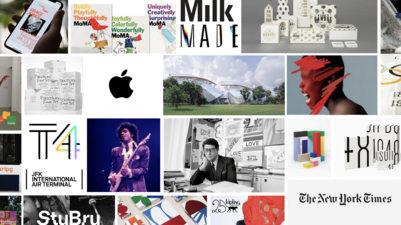
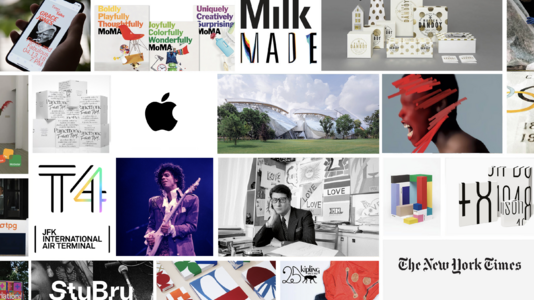
Base’s works overview
How do you keep your creativity going? Does having this international network help by giving you new perspectives, or do you have other ways of staying inspired?
TB
Our creativity is constantly renewed through exchange and collaboration between our different studios. We share a common method, but each Base office is completely autonomous, with its own leadership, culture and local context. A beauty project in New York will never be approached in the same way as in Geneva or Melbourne. That diversity is one of our greatest strengths. Each team brings a different perspective, and all of these viewpoints are shared daily through our internal channels, where we see projects and ideas evolving in real time.
Another key way we keep our creativity alive is by welcoming new talent. Attracting young designers keeps us on our toes. They bring change, new techniques, and new ways of questioning things.
Finally, many people at Base teach in design schools or lead workshops. Education is a big topic for us, and we will soon launch a new platform called Offmute, entirely dedicated to design education. We want it to reflect how much we value learning, teaching, and the constant renewal of ideas.
DJ
I am a bit less involved in teaching. I sometimes do workshops or sit on juries, but most of my creative exchange happens through more personal relationships. I have close connections with people from other disciplines, and those one-to-one conversations often take the form of mentorship or mutual exchange.
Recently, for example, I launched a new fashion brand in Belgium called Marie-Adam Leenhardt, where we support a young designer, share experience and help her develop her vision. I have done similar collaborations with artists and other creative profiles. That kind of partnership is my preferred way of sharing knowledge and staying connected.
When it comes to inspiration, I am quite old school. I believe you need to see and feel things. I never use Pinterest. I go to exhibitions, festivals and libraries, and I encourage everyone at the studio to do the same. Seeing things in real life, experiencing them physically, is what truly nourishes my creativity.
How would you describe Base Design’s values or philosophy as a studio?
TB
We give as much as we can. Generosity has always come naturally to us. From the beginning, we were simply happy to be paid for what we loved doing, so there was this openness and willingness to give. Even today, we often take on projects that are not particularly profitable because they feel meaningful.
We have also institutionalized pro bono work at Base. Every year, we commit to one pro bono project that receives the same attention, time and budget as any paid commission. It is not something we hand off to interns; it is a full team effort. Each year, team members can propose causes, organisations or NGOs they want to support. The whole studio votes, and the selected project is carried out by the people who suggested it, with the full resources of the agency behind them.
For us, this is not just generosity, it is a way of thinking and acting that has guided Base from the start. It is about giving meaning to design and contributing to something larger than ourselves. We have never built Base as a company to sell; we want it to last and to be carried forward by the next generation.
Looking back over more than two decades of Base Design, what key moments or turning points have defined your evolution as a company?
TB
There was a time around 2008 to 2010 when we went through real difficulties. We had been expanding rapidly, opening studios in Barcelona, Madrid and Paris, but at some point we hit a wall. The same entrepreneurial energy that had driven us from the start collided with our lack of management experience and structure. We simply did not have the knowledge or stability to sustain that growth. Closing those offices has been very painful, but it made us realize that wanting to grow was not enough.
After that period, we brought in Vincent Herbert as chairman. He came from the business world and helped us understand how to structure things properly, how to manage finances responsibly and how to think long-term. We also created a board with complementary profiles, including entrepreneurial and financial expertises, to help us make better decisions. This shift marked the beginning of a more solid and conscious form of governance.
DJ
Since then, we have completely restructured the company. Our holding is now a cooperative rather than a traditional capitalist model, which reinforces the sense of collective ownership and responsibility toward our teams. We also introduced a system of profit-sharing and bonuses to make sure everyone feels part of the company’s success.
Today, Base operates with what we call a “Small Giants” philosophy. We do not want to grow at any cost. Our priority is quality, talent, and financial sustainability. Growth only makes sense if it allows us to keep doing great work and maintain our culture. We also became a B Corp to make our impact measurable and to hold ourselves accountable.
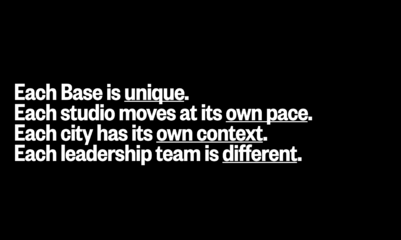
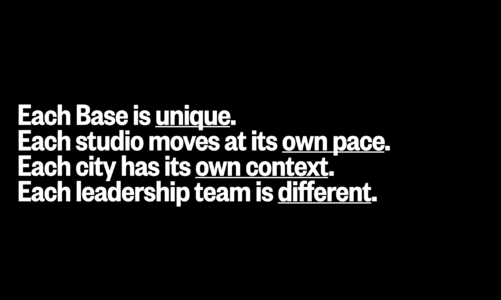
Base studios’ beliefs
Do you have strategic references or mentors who have influenced your development?
TB
Quite early on, we looked at different models for inspiration. One example is Pentagram, which has managed to maintain a structure for decades. We do not want to replicate their model, but we find it inspiring that theirs has remained stable over time.
Our own model is very different, but it is becoming clearer and easier to define. This was important, for instance, when we started discussions with our new partners in Saigon. We told them that by joining Base, they would be fully part of the network but remain 100 percent owners of their studio. It was not an acquisition or a joint venture. They keep their complete autonomy while sharing the same values and philosophy. Autonomy is a fundamental part of how Base operates.
How do you manage the Base network while balancing autonomy and shared initiatives?
TB
I rarely work on client projects anymore. My main client today is Base itself. I focus on the communication, growth and development of the group. To clarify the structure, our American partners and I own the studios in Brussels and New York, which are the two founding offices and hold the Base brand. The other studios, in Geneva, Melbourne and now Saigon, are led by people who have worked with us for many years. They are fully independent but part of the Base network.
Each studio operates autonomously, managing its own projects, finances and local strategy, while respecting a shared charter that ensures the same level of quality, ethics and creativity across the network. We share resources such as communication, portfolio visibility and group-wide initiatives that bring everyone together. Every two years, the entire company meets in person, and we also hold regular board meetings to keep the vision aligned and the dialogue active.
This balance between local autonomy and global coherence is what keeps the network dynamic. It sometimes creates friction, but it is also what drives innovation. For example, when our partners in Saigon joined, they immediately saw the value of this system. As a Vietnamese studio working with both international brands like Apple or Uniqlo and local brands expanding abroad, being part of Base gives them access to a global exchange of expertise. Teams from different cities meet weekly, share experiences, collaborate on projects and support each other.
DJ
Geoff Cook, our American partner, oversees this part of the network. He organizes weekly meetings with all the business development teams, where they not only share portfolios but also mutualize resources and opportunities. Someone might say, “I have a meeting with a potential client in Melbourne; can anyone share advice or contacts?” This collaborative mindset also applies to project distribution. Sometimes New York receives more incoming work than it can handle, so Geoff redirects projects to other studios or helps form mixed teams across continents. It can also work the other way round, with one studio helping another that is going through a slower period, whether by sharing projects, offering managerial support, or even sending someone temporarily to assist.
In some cases, this cooperation takes the form of international task forces. For large global clients, we may create hybrid teams with designers from Europe and the US working together. Sometimes a studio will bring in a creative director from another office to strengthen a local project. This constant flow of collaboration and knowledge sharing keeps the network alive and resilient.
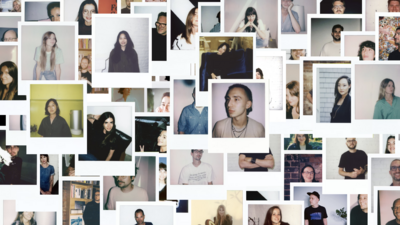
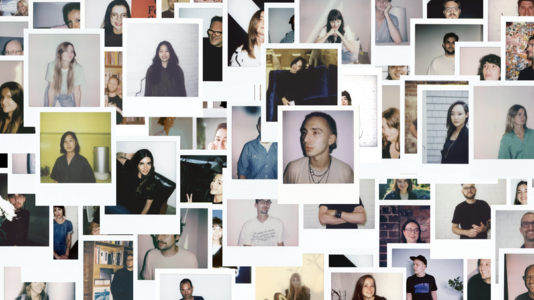
Base’s team
Where would you like to take Base in the coming years?
TB
Our main ambition is to never become a 100-person agency anywhere. We have learned that the ideal size for a Base studio is around 25 to 30 people. It allows us to maintain control, fluidity, and a sense of creative chaos without hierarchies or rigid departments. That scale preserves the collaborative energy we value most.
With Saigon now established and thriving, our goal is to keep expanding naturally through meaningful encounters rather than strategic or economic motives. We would like to explore new regions such as South America, Africa, or other parts of Europe like London or Scandinavia. What matters most is the people and the cultural connection.
A long-term dream for us is the “Base Academy,” a design school focused on education and transmission. It is still at an early stage but it feels like a natural continuation of our story and a meaningful way to give back.
DJ
We are also rethinking what the Base brand itself could become, how it can evolve, stay relevant, and inspire. That could mean exploring new creative fields such as sound or objects that enrich our ecosystem.
I remain in Brussels overseeing creative direction, while Thierry focuses on communication and the group’s global structure. Together we are putting our energy into strengthening this ecosystem. After more than thirty years, we have learned not to set anything in stone. Each new step, such as Saigon, is treated as a project. We explore, test, and move forward if it feels right. Staying fluid, adaptable, and curious is what keeps Base alive.
Do you set any limits for yourselves in terms of diversification? Do you have a defined framework, or do you approach it project by project, following your instincts and what feels right at the moment?
DJ
We do not set strict limits on diversification, as long as each new venture contributes meaningfully to the Base brand and stays connected to our core areas of identity, communication, and design. We would not suddenly launch a law firm or a jeans label, but we remain open to projects that extend our creative territory in relevant ways, such as experiences, sound, or new forms of storytelling. It is less about fixed strategies and more about intuition, about what feels right for the brand and the people behind it.
TB
The evolution of Base has always followed the evolution of our craft. When we realized we were falling behind in digital, we created Base Digital, which became a natural extension of our work. Today, we include disciplines such as film and sound, which complement our focus on design and image while opening new possibilities for how we think and communicate. These shifts keep us curious, responsive, and aligned with the cultural landscape.
What do you consider essential to the development of Base?
TB
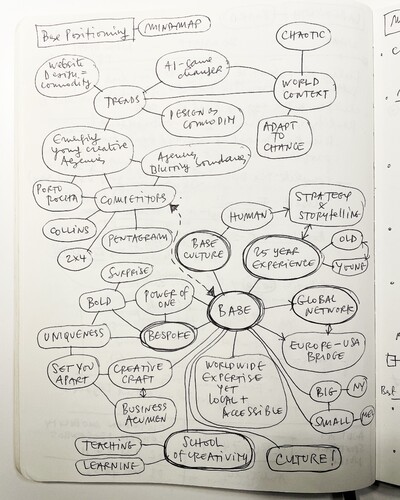
Beyond creative diversification, maintaining a strong and unified culture across all our studios is essential. We operate across multiple time zones, yet there is a shared rhythm that connects everyone. This culture is built through rituals and shared practices such as inclusive meetings, openness, and honest discussion. These methods create cohesion and trust across the group.
Over time, this culture has started to sustain itself. We no longer need to enforce it; it lives through the people within the company. Lola Philippart, who began as an intern and now directs the Brussels studio, perfectly embodies this spirit of sincerity, collaboration, and curiosity. Seeing the culture evolve naturally, carried by new generations, is one of the most rewarding aspects of our work. It ensures that Base continues to grow and adapt while remaining true to its collective mindset. I often say that the real definition of a good company culture is the distance between what is said in the boardroom and what is said at the coffee machine. If those two conversations are far apart, then the culture is not working. For me, a strong culture is one where the values, the language, and the daily reality are consistent. When everyone, from leadership to the newest team member, shares the same understanding of what we stand for: that is when the organization truly functions.
How do you manage the Base network while balancing autonomy and shared initiatives?
TB
Our communication has evolved alongside the company, moving from chaos to structure. I often say that managing the communication of a communication agency is like being the coach of the French national football team, because everyone believes they could do it better. The first rule I set when we created the internal communication unit was simple: before focusing on the outside world, we need to make sure that everyone inside wants to work together. If we fail at that, nothing else matters.
For me, communication at Base is about giving meaning to chaos every day. The organization is complex, with local and global dynamics, different teams and partners, and constant movement. But I believe that chaos is where good ideas come from, so I am comfortable working within it. We now have clearer guidelines and a structure that supports this creative flow.
Every Base team member has a voice. We encourage them to speak publicly, to give talks, or to write articles about their work. We launched an open call across all studios asking who wanted to share their story, and now around fifteen people, including partners, are doing just that. This initiative, along with our growing press presence and more structured communication efforts, reflects how the company continues to evolve while staying true to its collective spirit.
DJ
We once organized an exercise with all our studios, where each team had to describe the others as if they were characters in a “Chinese portrait.” It was playful but revealing. Brussels came out as the Joker, the one who surprises, questions, and challenges. New York was seen as the professional, precise and client-focused. Geneva was the meticulous one, with a strong sense of rigor and typography. These portraits reflected how each studio perceives the others, and how different personalities form a balance across the network. We see the same idea within teams: every personality has a place.
TB
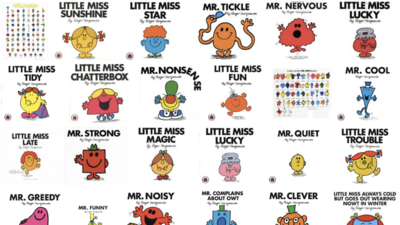
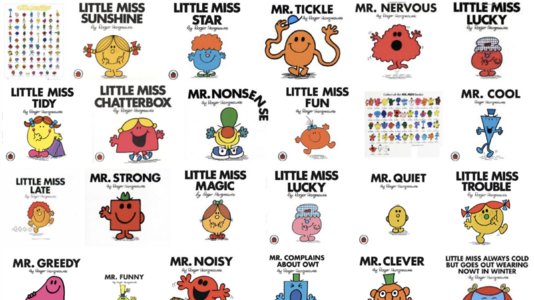
Like in the “Mr. Men” books, you need a “Mr. Quiet” as much as a “Mr. Loud.” The goal is to let each person fully embody who they are, because the team’s strength comes from this diversity. The same principle applies to our offices. Each studio has its own character, and we take great care not to standardize them.
What do you notice about the new generation of creatives?
TB
What stands out to me is how open and connected they are. They move easily between disciplines like design, film, and digital culture, and they care deeply about meaning and values in their work.
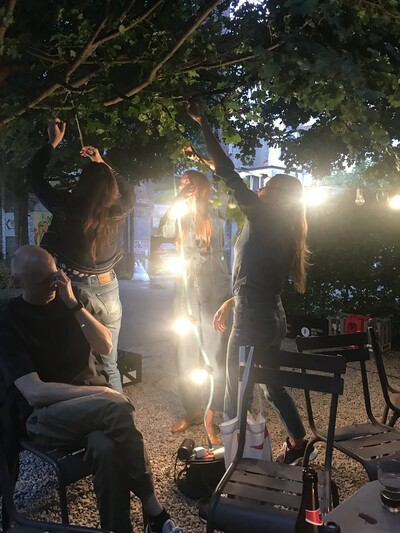
At Base, we attract them through people rather than words. The younger generation within the company are our best ambassadors. They teach, mentor, and naturally connect with those just starting out. That sense of proximity and shared culture is what draws new creatives in.
We also make sure that when they join us, their voice matters. Interns are fully involved in projects and presentations, and many leave saying they have never experienced such a respectful and inclusive environment. This generation wants authenticity and collaboration, and that is exactly the kind of culture we aim to sustain.
Base’s team
What is your perspective on the use of AI by brands and studios?
TB
I see AI as simply the next step in the ongoing evolution of our profession, not something to be afraid of. Over the past thirty years, we have moved from working without computers to Macs, then to CD-ROMs, the Internet, and social media. Each technological shift has changed the way we work, and AI is part of that same continuum.
What matters most to us is learning and sharing knowledge. We want Base to be a place where everyone learns something every day. That is why, when someone is particularly skilled in a field like digital or AI, their role is not just to apply that knowledge but to share it. Recently, our partner and digital director Mirek set up an AI task force across all studios, with ambassadors in each office. They organize workshops and group sessions where everyone contributes and experiments together.
The goal is to integrate new skills and diversify profiles so that we keep evolving collectively. Some may find it challenging to adapt, but for us, the use of AI already feels natural within the teams. It is part of our DNA to stay open, to learn, and to grow through every new phase of our craft.
Are there future projects or directions you keep in mind? Do you think about transmission or legacy?
TB
We started writing a book about Base, which we really need to finish. It’s not meant to be a glossy monograph full of polished projects, but rather a small, black-and-white book of short stories. Each story carries a little lesson or insight, often from real experiences that shaped us.
DJ
One of them, for instance, is about a presentation we gave years ago in Germany. I thought the designer on our team had done terribly, he seemed unsure, not very articulate. But in the end, the client told us he was the reason we won. They said his openness and vulnerability made them want to work with him. That moment taught me something important: people don’t want perfection, they want authenticity. Present as you are, not as someone you think you should be.
If you could do another job in another era, what would it be and when?
TB
I think the period that fascinates me most is the late 1960s in the United States. It was a time when design and advertising were not yet separated, when both fields shared a strong sense of communication and storytelling. I would have loved to experience that moment, when creativity was raw, experimental, and deeply connected to culture.
I think of people like George Lois, Bob Gill and Saul Bass, or others from that generation, who blurred the lines between design, art, and media. There was something bold and playful about that era, but with real creative freedom. Those figures remain some of my heroes today.
DJ
I think I would have been drawn to something around storytelling or imagination, maybe film or performance. My wife is a musician, and every time she performs, I feel this mix of admiration and nervousness. There’s something powerful about being on stage, exposed like that. It’s a world that both fascinates and scares me.
Are there books that have guided or influenced you along the way?
TB
One of my favorite book ever is the “Whole Earth Catalog.” The Whole Earth Catalog was an American counterculture publication created by Stewart Brand, first released in 1968 and updated through the early 1970s. It was a large-format, DIY, pre-internet “tool catalog” that gathered and reviewed resources (books, tools, technologies, and ideas) that could help people live more self-sufficient, creative, and environmentally conscious lives. It fostered a worldview blending environmental responsibility, technological optimism, and radical self-education. I just love everything in it!
DJ
Actually, the one I remember the most is the last one I read (and just finished). It’s Conversations avec David Hockney, written by art critic Martin Gayford—a wonderful book in which Gayford describes his relationship and friendship with DH. It reads like a ten-year-long interview. It’s very touching to see how, for DH, being fascinated by the world around you and looking at it carefully can be such a driving force for creativity and source of energy in life.


Whole Earth Catalog
What advice would you give to someone who wants to start a studio today?
TB
My advice is simple: never work alone. Collaboration is everything. When I speak in design schools, I always tell students that of course they will learn the craft, they will enter the professional world, work in agencies, and so on. But the most important thing is to look around them, at the people sitting in their class. One of them might become their lifelong creative partner.
For me, it all comes down to encounters—to finding people you trust, admire, and love working with. That energy, that chemistry between people, is what sustains creativity over time.
DJ
Even in a digital and increasingly virtual world, collaboration remains a driving force. I was at a conference in Paris recently, New Ways of Seeing, and the main takeaway was precisely that: despite technology, despite distance, the collective spirit still matters most.
That doesn’t mean everyone has to start a company together. It simply means staying open, not isolating yourself. The solitary craftsperson belongs to another era. Today, creativity thrives through shared energy, dialogue, and collaboration. Without that, something essential is missing.